

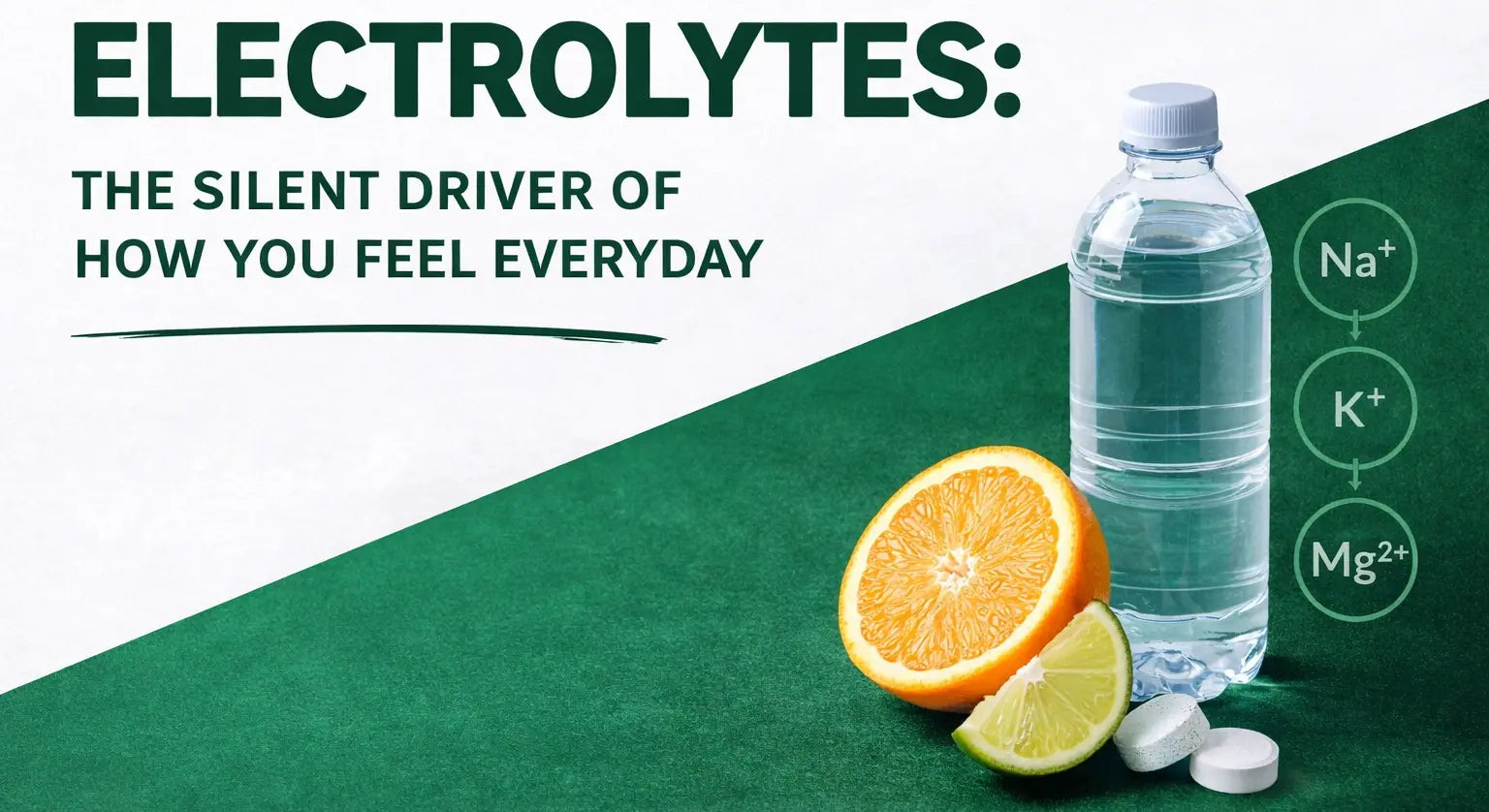
Electrolytes: The Silent Driver of How You Feel Every Day
Fatigue, brain fog, cramps, and poor sleep — the cause might be simpler than you think.
Most people associate electrolytes with sports drinks and elite athletes. But the reality is that electrolyte balance affects every system in the body — and low levels can quietly undermine how you feel, think, and perform long before you recognise what’s causing the problem. Here’s what the science says, and why daily attention to electrolytes matters more than most people realise.
What electrolytes actually are
Electrolytes are charged minerals — including sodium, potassium, calcium, magnesium, chloride, and phosphate — that carry electrical signals throughout the body. They regulate fluid balance across cells, help nerve signalling, and trigger muscle contractions. Without adequate levels of these minerals, the body cannot maintain basic physiological function (Cardenas, 2023). In short, they are not optional extras. They are fundamental to how the body runs, moment to moment.
The everyday symptoms most people ignore
Electrolyte imbalances do not always announce themselves with dramatic symptoms. More often, the signs are subtle: persistent tiredness that sleep does not fix, difficulty concentrating, low-grade headaches, muscle twitches, or a general sense of feeling ‘off’. Research published in the Journal of Interventional Nephrology highlights that even mild electrolyte disorders can lead to measurable dysfunction — affecting muscle function, cardiovascular rhythm, and neurological performance — long before they reach clinical severity (Ferreira, 2024). For active individuals especially, these effects compound quickly.
Water balance plays a central role here. Electrolytes regulate how effectively cells absorb and keep fluid, influencing metabolism, thermoregulation, and circulatory function. Research by Armstrong and Johnson (2018) emphasises that the relationship between water intake and electrolyte status is inseparable — hydrating without adequate mineral support can dilute electrolyte concentrations further, a phenomenon sometimes seen in people who drink large volumes of plain water without replenishing key minerals.
Electrolytes, performance, and recovery
During physical activity, electrolytes are lost through sweat — and the consequences of not replacing them are well documented. Research published in Medicine & Science in Sports & Exercise found that electrolyte depletion during exercise contributes to dehydration, reduced endurance, impaired muscle function, and an increased risk of cramping (Sawka et al., 2007). Replenishment during and after training is not simply about comfort; it directly affects how well the body adapts and recovers from the demands placed on it.
This is especially relevant for those training in warm environments, engaging in prolonged cardio, or following low-carbohydrate or intermittent fasting protocols — all of which can accelerate electrolyte loss or reduce dietary intake of key minerals.
The cardiovascular dimension
Beyond muscle and performance, electrolyte balance has a direct bearing on heart health. Sodium and potassium play opposing but complementary roles in regulating blood pressure and cardiac rhythm. Research published in the New England Journal of Medicine found that disruption to this balance — through poor diet, excessive sweating, or inadequate replenishment — contributes to hypertension and cardiovascular risk (Adrogue and Madias, 2014). Keeping the right mineral ratios is not only a performance concern; it is a long-term health one.
Supporting electrolyte balance daily
Electrolytes are found in whole foods — leafy greens, dairy, nuts, fish, and fruits — and a varied diet stays the foundation of good mineral status. For those with higher demands through training, heat exposure, or dietary restriction, targeted supplementation can provide a practical and consistent top-up.
AETHER ELECTROLYTE™ by Hastings Royale is formulated around this principle — a clean electrolyte blend containing potassium citrate, magnesium oxide, and calcium phosphate, alongside B vitamins, vitamin D3, and L-Carnitine Fumarate to support energy metabolism and recovery. It has no sugar, no artificial colours, and no stimulants, making it suitable across a range of protocols including low-carb and intermittent fasting. It is designed not as a replacement for a balanced diet, but as a reliable support system for when your dietary demands and your usual daily intake aren’t matched to your daily needs.
The Bottom Line
Electrolytes work quietly. When levels are adequate, you won’t notice them — and that is exactly the point. It is when they fall short that their importance becomes clear: in the fatigue that lingers, the focus that fades, the cramp that arrives uninvited. Paying attention to your electrolyte status — through diet, hydration habits, and considered supplementation where proper — is one of the more straightforward ways to support how you feel and function every day.
For more on recovery, performance, and evidence-based wellness, explore the Hastings Royale range.
References
Adrogue, H.J. and Madias, N.E. (2014) ‘Sodium and potassium in the pathogenesis of hypertension’, New England Journal of Medicine, 371(3), pp. 243–252. DOI: 10.1056/NEJMra1213826.
Armstrong, L.E. and Johnson, E.C. (2018) ‘Water Intake, Water Balance, and the Elusive Daily Water Requirement’, Nutrients, 10(12), p.1928. DOI: 10.3390/nu10121928.
Cardenas, D.U.N.N.E. (2023) ‘Electrolytes: Mechanisms and implications for internal body functioning’, Clinical Nutrition Hospital Dietetics, 43(3), pp. 1–2. DOI: 10.12873/0211‐6057.43.03.206.
Ferreira, K. (2024) ‘Electrolyte Disorders: Understanding, Diagnosis, and Management’, Journal of Interventional Nephrology, 7(6), pp. 332–335. DOI: 10.47532/oain.2024.7(6).332–335.
Sawka, M.N., Burke, L.M., Eichner, E.R., Maughan, R.J., Montain, S.J. and Stachenfeld, N.S. (2007) ‘Exercise and fluid replacement’, Medicine & Science in Sports & Exercise, 39(2), pp. 377–390. DOI: 10.1249/mss.0b013e31802ca597.