
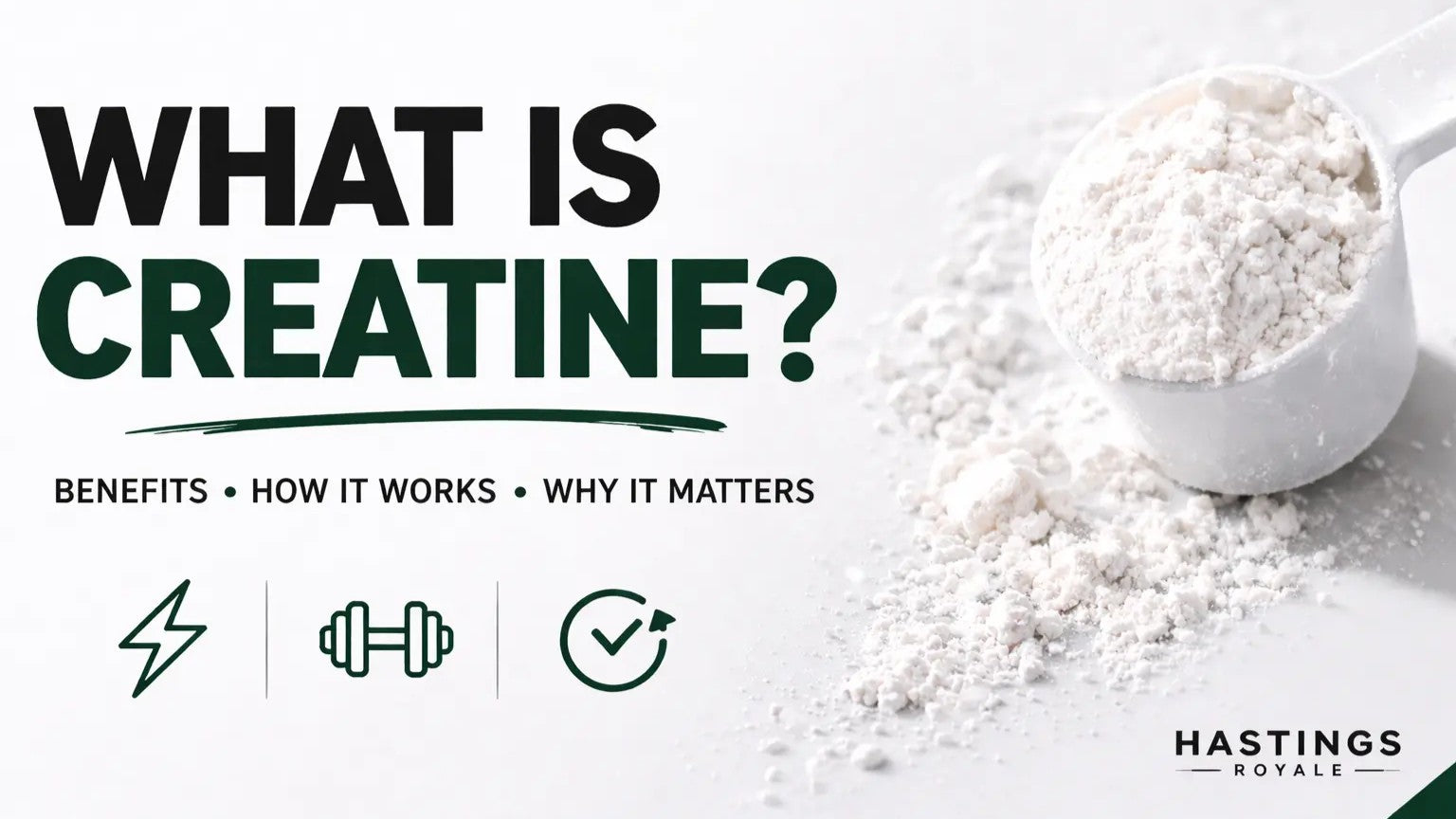
Creatine: Everything You Need to Know Before You Start
If you've spent any time around a gym, a fitness forum, or even a supplement store, you've heard about creatine. Some people swear by it. Others are convinced it'll give them kidney damage, turn them into a bloated balloon, or make them dangerously aggressive. (Spoiler: none of that is true.)
The reality is that creatine is one of the most researched, evidence-backed supplements in the world — and for good reason. Whether you're picking up a dumbbell for the first time or looking to push past a plateau, understanding what creatine does and how to use it properly can genuinely change how you train.
Let's get into it.
What Is Creatine?
Creatine is a compound made from three amino acids — arginine, glycine, and methionine. Your body produces it naturally, and you also get small amounts from foods like red meat and fish. About 95% of creatine is stored in your muscles as phosphocreatine, which fuels short, intense bursts of activity. Supplementing simply “tops up” those stores, giving your muscles more energy when it matters most.
How It Works
Muscles rely on ATP (adenosine triphosphate) for energy, but ATP stores deplete quickly. Phosphocreatine regenerates ATP, keeping muscles firing during high‑intensity exercise. Research published in the Journal of the International Society of Sports Nutrition confirms that creatine supplementation increases intramuscular phosphocreatine stores, which enhances the capacity for ATP regeneration during high-intensity exercise. In practical terms, this means:
- More power output during each set
- Better recovery between sets
- Greater training volume over time
- Improved performance across repeated bouts of intense exercise
Proven Benefits
- Strength & Power: Meta‑analyses show creatine significantly increases maximal strength, helping athletes and everyday gym‑goers push heavier and perform better.
- Muscle Growth: Creatine enables harder training and faster recovery, which drive hypertrophy. Studies confirm greater lean mass gains when creatine is paired with resistance training.
- Cognitive Support: Creatine also supports brain function, improving short‑term memory and processing speed, especially under fatigue or sleep deprivation.
Types of Creatine
- Creatine Monohydrate: The original, most researched, and most affordable. Proven effective over decades.
- Creatine Hydrochloride (HCL): More soluble, easier to absorb, and less likely to cause water retention or digestive discomfort.
- Free‑Acid Creatine: Highly bioavailable and fast‑acting. When paired with HCL, as in Hastings Royale’s Creatine HCL Gold, it delivers dual‑pathway absorption for maximum ATP output.
How to Take It
- Dosage: Standard monohydrate is 3–5g daily. HCL‑based formulas require smaller doses due to higher absorption.
- Loading: A loading phase (20g/day for 5–7 days) saturates muscles faster, but daily use without loading achieves the same results in about a month.
- Timing: Consistency matters more than timing. Research suggests post‑workout may offer a slight edge, but the key is taking it daily.
Is It Right for You?
If you’re a healthy adult engaging in regular physical activity, creatine is worth considering. It’s not a shortcut, but it’s a proven tool to support consistent training, recovery, and performance. At Hastings Royale, we believe supplements should elevate everyday life — helping you feel stronger, more energized, and more capable in everything you do.
The Bottom Line
Creatine is not a trend. It’s one of the most studied, effective, and accessible performance supplements available. Start with the right form for your goals, take it consistently, train hard, recover well — and let the results speak for themselves.
References
Antonio, J. & Ciccone, V. (2013). The effects of pre versus post workout supplementation of creatine monohydrate on body composition and strength. Journal of the International Society of Sports Nutrition, 10(36).
Avgerinos, K.I., et al. (2018). Effects of creatine supplementation on cognitive function of healthy individuals: A systematic review of randomized controlled trials. Experimental Gerontology.
Buford, T.W., et al. (2007). International Society of Sports Nutrition position stand: creatine supplementation and exercise. Journal of the International Society of Sports Nutrition, 4(6).
Devries, M.C. & Phillips, S.M. (2014). Creatine supplementation during resistance training in older adults — a meta-analysis. Medicine & Science in Sports & Exercise.
Forbes, S.C., et al. (2021). Creatine supplementation and endurance performance: surges and sprints to win the race. Journal of the International Society of Sports Nutrition.
Greenhaff, P.L., et al. (1993). Influence of oral creatine supplementation on muscle torque during repeated bouts of maximal voluntary exercise in man. Clinical Science, 84(5), 565–571.
Lanhers, C., et al. (2017). Creatine supplementation and upper limb strength performance: A systematic review and meta-analysis. Journal of Strength and Conditioning Research.
Persky, A.M. & Brazeau, G.A. (2001). Clinical pharmacology of the dietary supplement creatine monohydrate. Pharmacological Reviews, 53(2), 161–176.
Rawson, E.S. & Volek, J.S. (2003). Effects of creatine supplementation and resistance training on muscle strength and weightlifting performance. Journal of Strength and Conditioning Research.